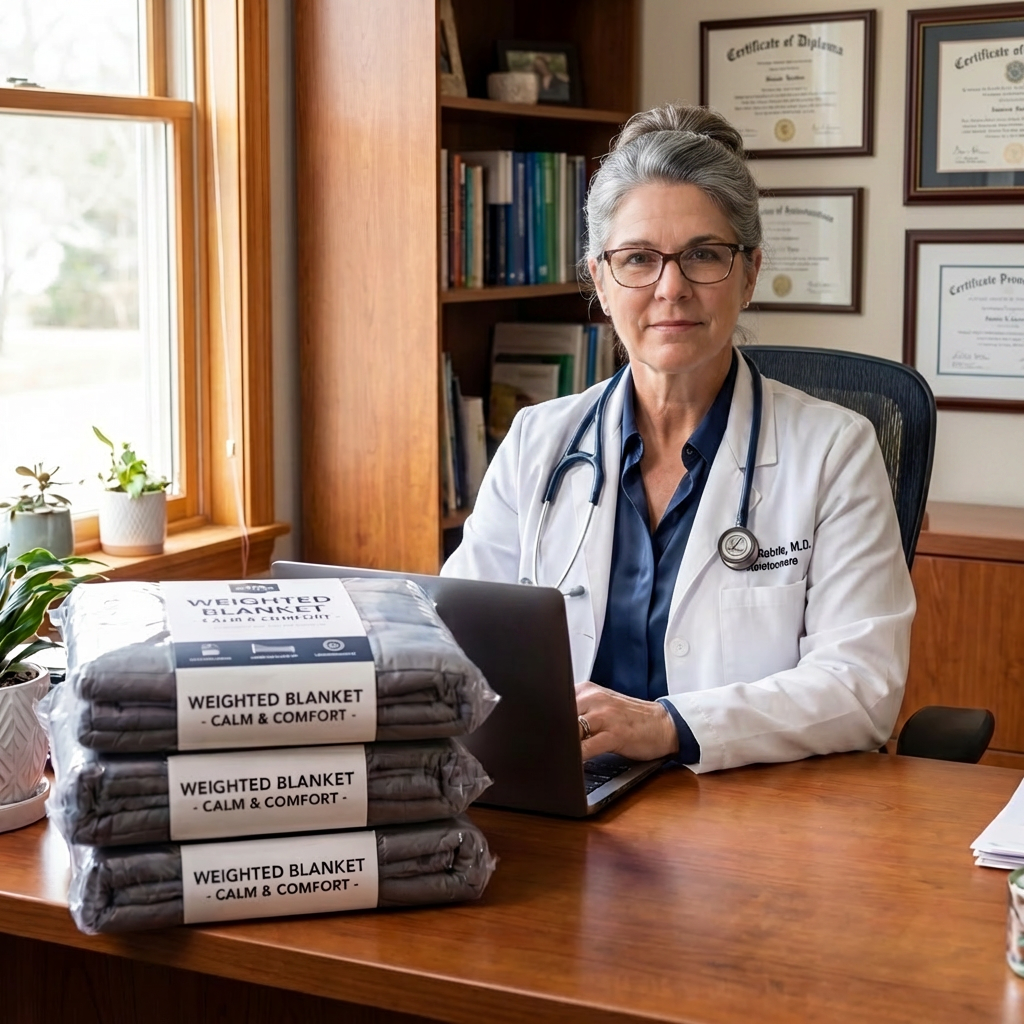
In thirty years of internal medicine, the prescriptions I've written most often are the ones I've felt worst about.
Ambien. Trazodone. Lunesta.
Patients come into my office exhausted. I reach for the prescription pad because that's what I have to offer.
I know what happens next.
In six months, most can't sleep without the pill. In two years, some fall getting up at night because the medication slowed their reaction time. When they try to quit, the insomnia comes back worse.
If you've ever tried prescription medications for sleep — you know the real price you pay for it with your health.
That was my position about six months ago, when my sister Martha called me.
My Sister's Sleep That Started My Investigation
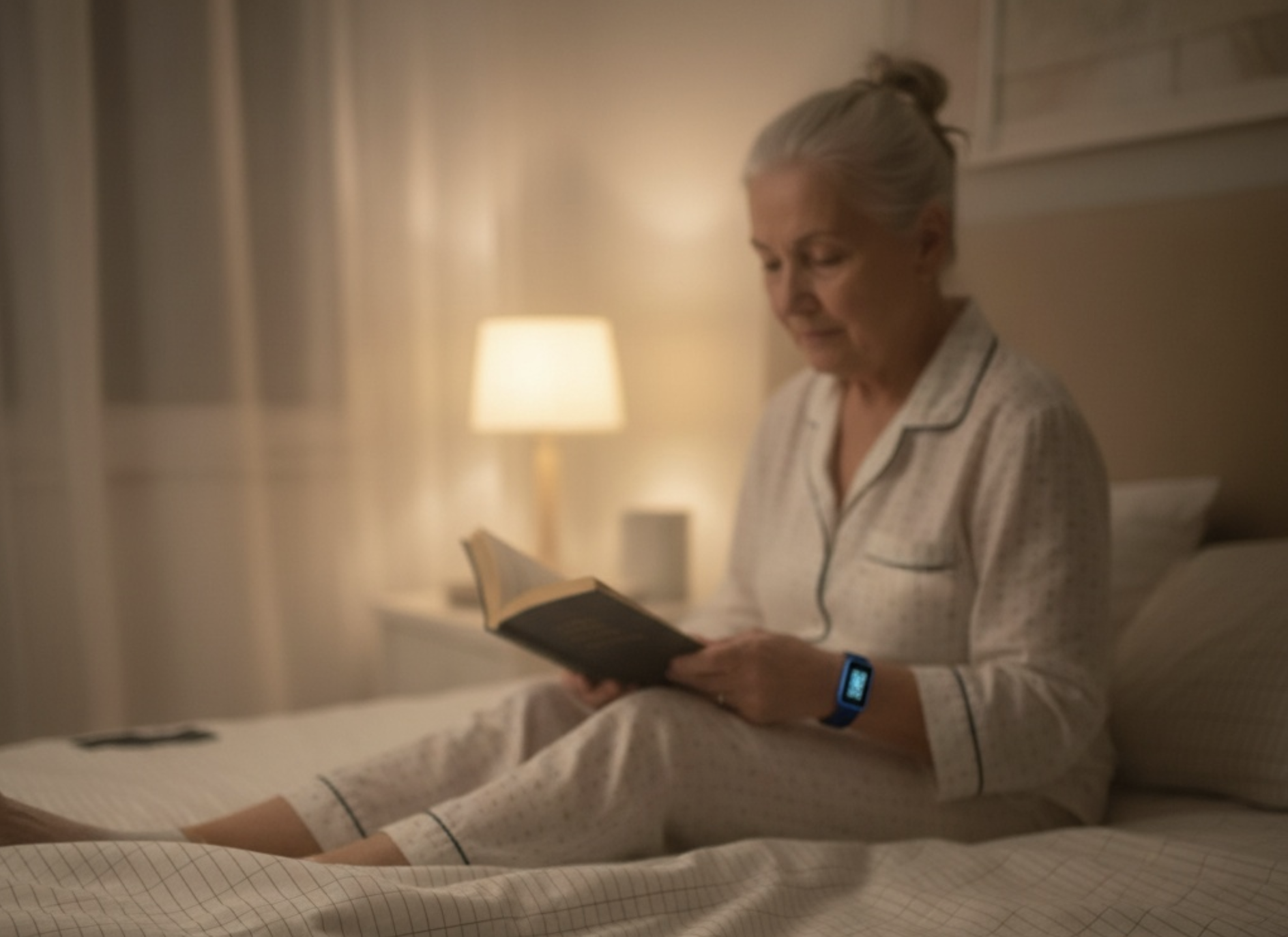
My 68-year-old sister, Martha, has dealt with rheumatoid arthritis for fifteen years. She's the type who tries everything but believes nothing — exactly how I raised her to be.
When she told me about her new weighted blanket, I was ready with my usual "gentle sister reality check" about placebo effects.
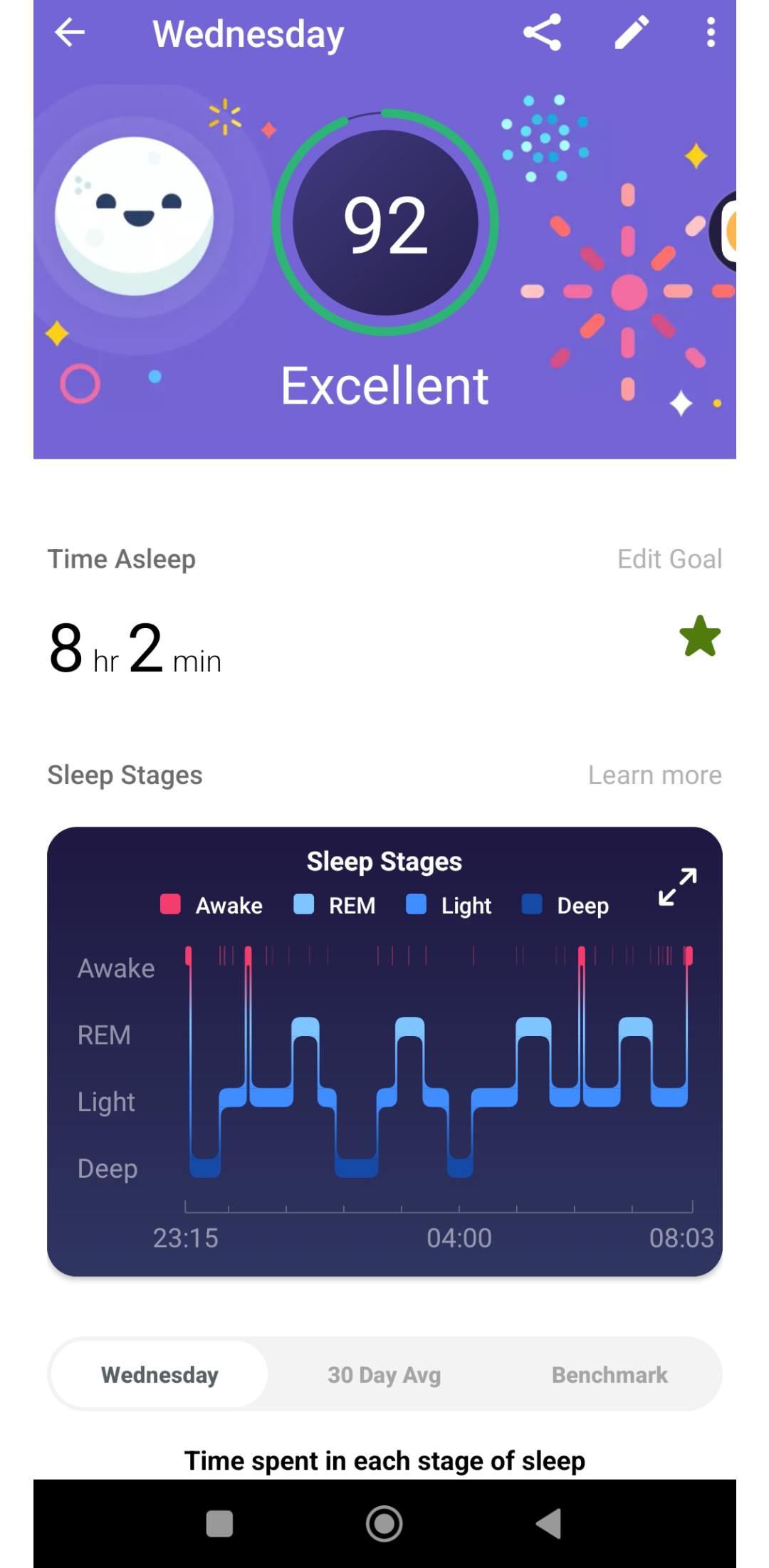
"I'm sending you my Fitbit data, look at it before you lecture me," she said.
Before weighted blanket:
Sleep score 67–71, deep sleep 42 minutes, waking up 8–12 times
Two weeks with blanket:
Sleep score 84–87, deep sleep 1 hour 48 minutes, waking up 2–4 times
"Josephine, I slept eight hours straight. That hasn't happened since Obama was president."
Martha doesn't exaggerate. These weren't subtle changes — they were dramatic and sustained.
I Measured My Sister's Sleep For 3 Weeks
I had heard patients mention weighted blankets for years and dismissed them, filed under the same shelf as essential "snake" oils and copper bracelets.
Over the next three weeks Martha kept sending me her Fitbit data, unsolicited.
I drove to her house that Saturday. I watched her fall asleep under it.
Her heart rate went from 78 down to 61 in about twelve minutes. She slept through the night while I sat there reading.
That's when I got really invested, so I decided to read the research.
Studies I Couldn't Ignore
That weekend I found:
Journal of Clinical Sleep Medicine (2020): 120 insomnia patients — weighted blankets cut insomnia severity by more than half in four weeks.
American Journal of Occupational Therapy (2024): Confirmed improvements in mood and sleep across adult users.
Journal of Sleep Research: Pressure on the body triggers the body's "calm down" system — heart rate slows, stress hormones drop, the brain releases more melatonin.
Journal of Alternative and Complementary Medicine: Measurable drops in anxiety during stressful procedures when patients were given weighted blankets.
Here's the science, in one sentence you can explain to your grandmother:
Firm, even pressure on the body tells your nervous system that you are safe, and a safe nervous system falls asleep faster and stays asleep longer. That's what a weighted blanket does.
It's the same reason a baby calms down when you swaddle it, and the same reason a dog leans into you when it's scared.
Twenty-plus studies on adults confirm it. The category is real.
But the studies used research-grade blankets built to precise weight specifications. Not the $60 blanket a typical consumer buys from Amazon.
So I wanted to know:
Were consumer blankets actually providing therapeutic sleep improvements? Or was this another case of real science being exploited by garbage products?
I had to know.
The 3-Month Investigation Begins
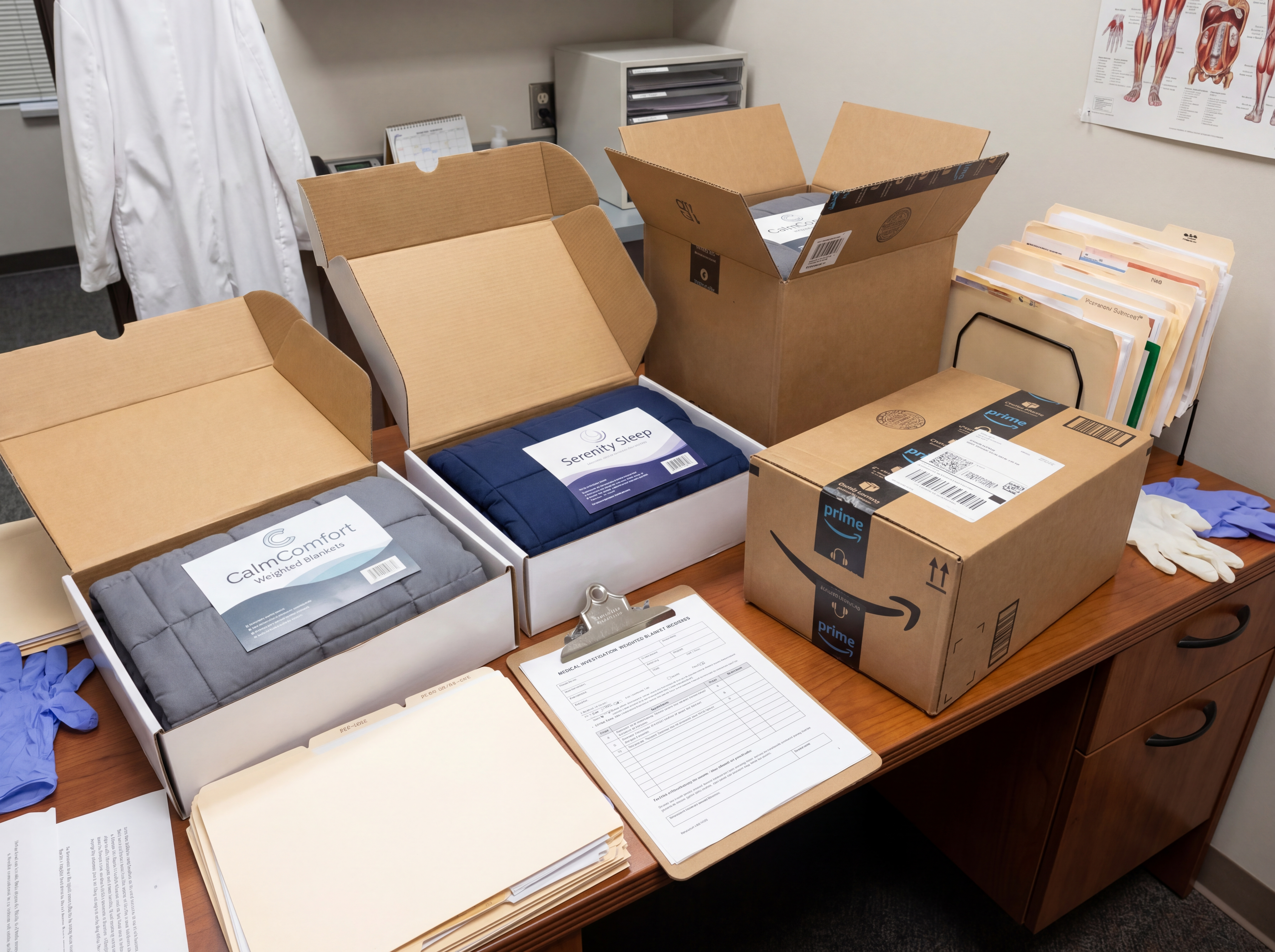
I bought 12 weighted blankets ($49–$299) and recruited 12 volunteers having trouble falling asleep and staying asleep, ages 54–78.
The reasons varied: nightmares, anxiety, overthinking, stress, chronic pain.
Two weeks of baseline readings per volunteer before any blanket went on a bed.
Average baseline: 48 minutes of deep sleep, 5 wake-ups a night.
The plan was to test for three months and let the data speak. It took nine.
The Investigation Timeline
Week 1: Every Single Blanket Worked
I'll be honest — the first week shook me.
All twelve blankets worked immediately.
Deep sleep nearly doubled across the group — from 38 minutes to 71. Wake-ups dropped from 5 a night to 2.
Nine of twelve volunteers told me it was the best sleep they'd had in years.
One woman told me she felt like she was "wrapped in a cocoon and very safe" after three nights under the blanket.
By day 7 I had to accept it: weighted blankets are real. The pressure does what the studies say it does. But would the effects last?
Week 3: The Honeymoon Was Over
Around week three, the complaints started:
"I can't fall asleep under it anymore." "I kicked it off last night." "I have to stick my feet out or I can't sleep."
The Fitbits were already showing it: deep sleep had dropped from 71 minutes back to 54. Wake-ups had climbed from 2 back to 5.
That made sense: in the first two weeks the deep pressure feeling overrode the heat — bodies felt more safe than hot. As they adapted to the pressure, the reality kicked in.
I bought cheap under-sheet thermometers and asked each volunteer to take one reading every morning at 6 AM.
Thermometer Readings: After Two Weeks
Two weeks of readings explained everything:
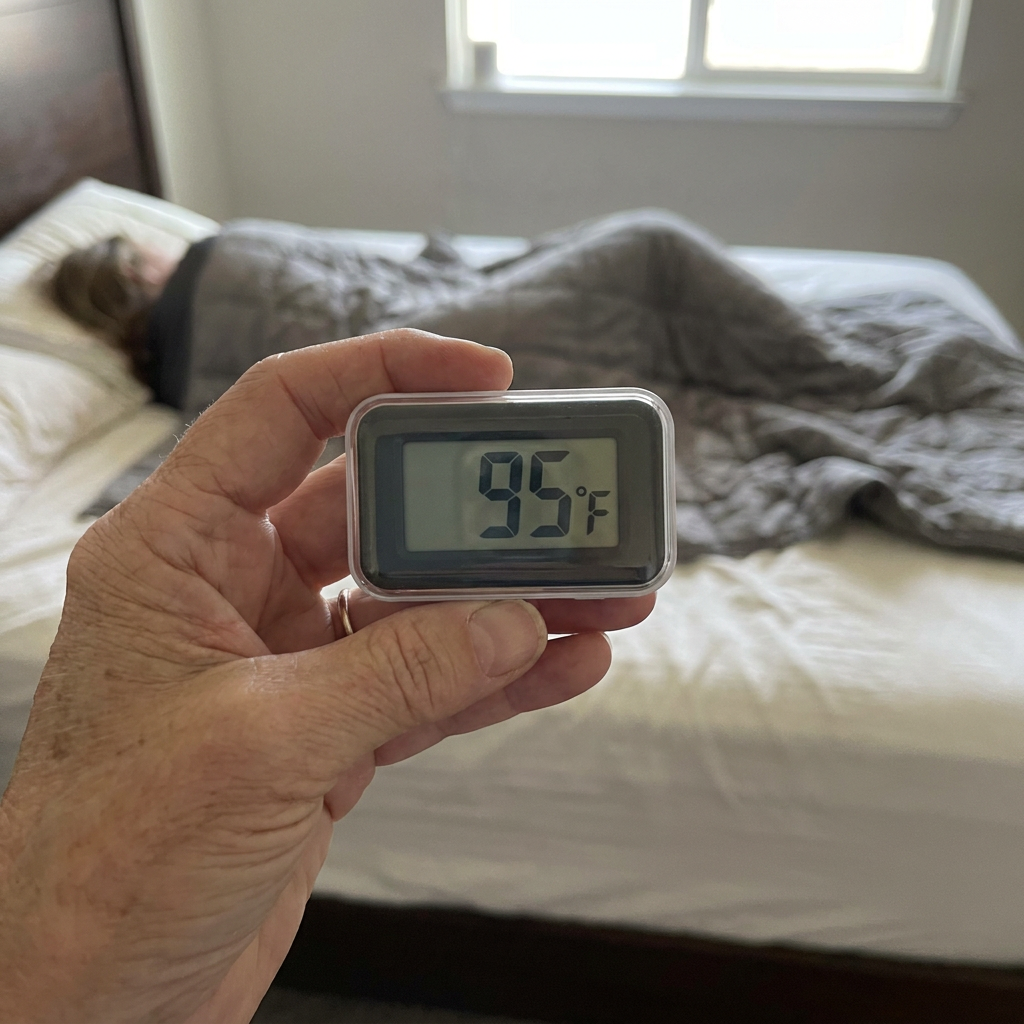
Knitted blankets (Bearaby, Silk & Snow, Yaasa): 84 °F — deep sleep holding at 74 min
BareEarth: 84 °F — deep sleep holding at 78 min
Baloo Living, Gravity Blanket: 90 °F — deep sleep declining at 67 min
Mid-price bead blankets: 95 °F — deep sleep collapsed to 51 min
Budget Amazon blankets: 96 °F — deep sleep collapsed to 42 min
The hotter the blanket ran, the worse the sleep. Every single volunteer followed the pattern.
Month 2: The Knitted Blankets…
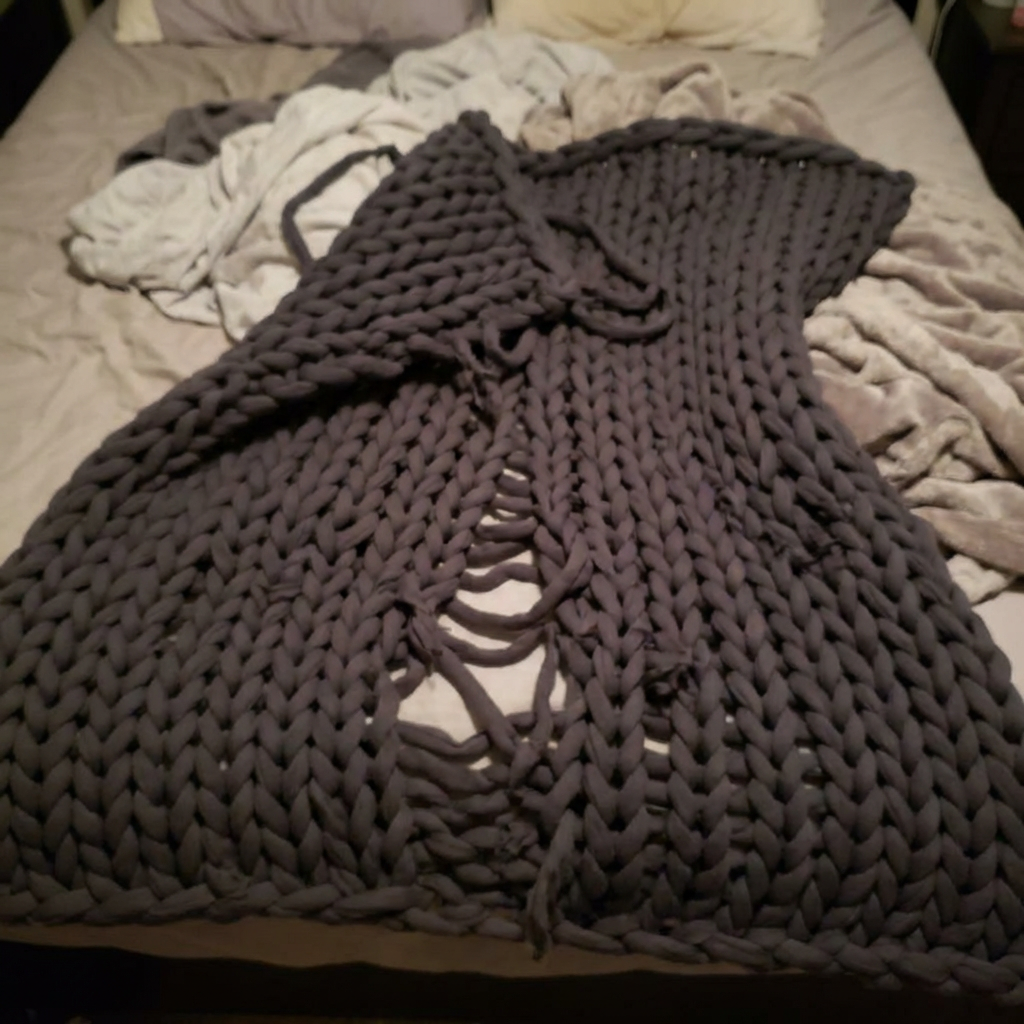
The three knitted blankets held their temperature. Open weave, no trapped fill. Volunteers rarely kicked them off.
Everything else went wrong.
The Bearaby unraveled at week six after the volunteer's cat slept on it twice. The Silk & Snow slid off the bed every night — she said sleeping under it was "like sleeping under a very expensive fishing net that won't stay put."
Two of the three knit volunteers had quit the study by end of Month 2. The third had moved hers to the couch as decoration.
Knitted blankets solve heat. They fail on everything else — durability, cleanability, slippage, and price. $229–$299 for a blanket you can't wash and can't keep on the bed — I couldn't recommend that.
Month 3: The Survivors
Nine blankets had been eliminated. Three were still in active use:
Gravity Blanket — $249. Used nightly. Moderate heat complaints. Deep sleep up 18 min vs. baseline.
Baloo Living — $289. Used nightly. Mild heat complaints. Deep sleep up 24 min.
BareEarth — $199. Used nightly. NO heat complaints. Deep sleep up 37 min.
The BareEarth numbers were leading. Its volunteer had stopped kicking it off. Her Fitbit showed the deep sleep and reduced arousals the research had predicted — numbers I hadn't seen on any other bead blanket.
How was that possible? It wasn't the most expensive blanket, and it was made of the same materials as the other two.
I had to know.
Tracking Down the Mystery
BareEarth was a company I'd never heard of.
Small operation out of Hickory, North Carolina.
Their website was basic, their marketing minimal.
Yet their blanket outperformed brands charging almost twice the price.
I found the founder's email right on their website and offered him a call.
Two hours later, my phone rang.
"Josephine? This is Rob Hartley. I've been waiting three years for someone in medicine to ask these questions."
The 73-Year-Old Retired Fire Gear Engineer Who Solved The Problem
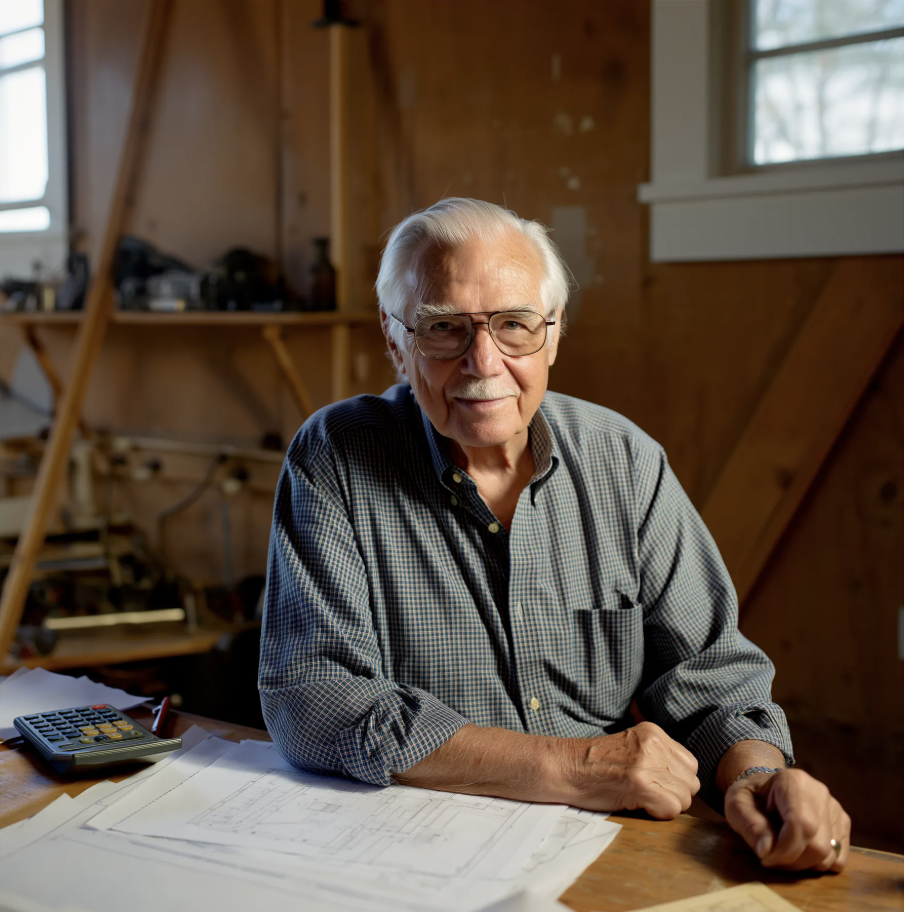
Rob Hartley wasn't what I expected.
A 73-year-old retired PPE (personal protective equipment) engineer from Globe Manufacturing — the company that makes the protective turnout gear American firefighters wear into burning buildings.
He said he stumbled into weighted blankets through his wife's anxiety-driven sleep issues.
"I loved the idea of weighted blankets. The research was solid. My wife felt calmer the first week. She was falling asleep fast and easy — I saw everything in her life becoming better."
"But a few weeks later she was kicking it off the bed at 2 AM because she was cooking underneath it. We spent $189 on a blanket that stopped working in twenty days."
"That's exactly what my volunteers felt," I said.
"Right. So I did what engineers do — I solved the problem."
His solution came from an unexpected place.
The Firefighter's Turnout Coat
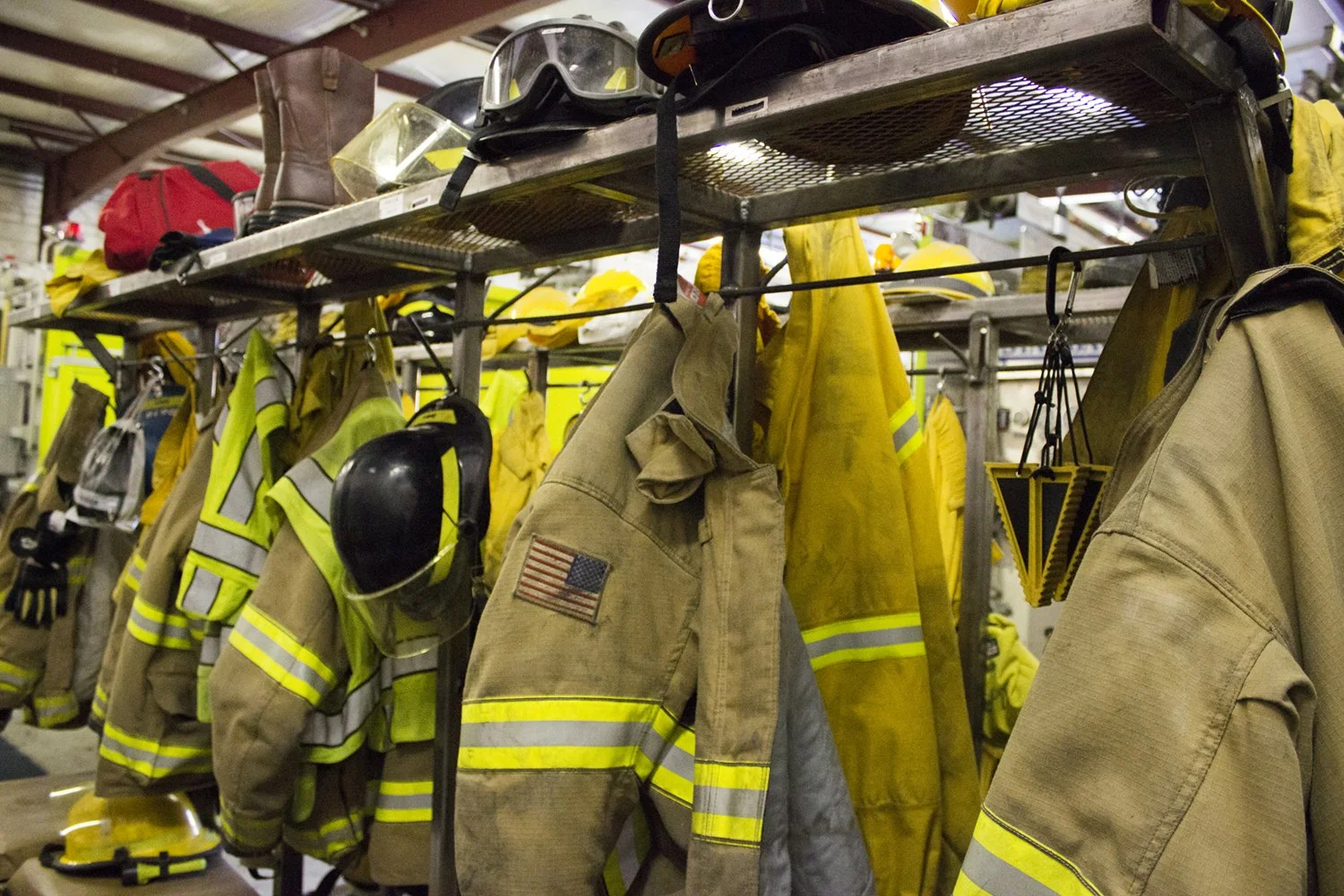
"Do you know how a firefighter doesn't cook inside his own jacket?"
"I don't," I admitted.
"A turnout coat has to hold 45 pounds of gear on a man's body inside a burning building, and still let his body heat escape, or the man dies of heatstroke. Globe solved that problem in the 1960s."
"How?"
"Air channels. Hot air always rises — it's the one thing even a middle-schooler knows about heat. So we built jackets with tiny air channels — narrow corridors running between protective layers. Heat rises up through the channels and out the top."
"A weighted blanket is the same engineering problem — weight on top of a warm body in a closed room. Every brand builds it as one big bag of beads. The person underneath cooks, and sleeps worse than before the blanket."
The Tru-Balance Grid
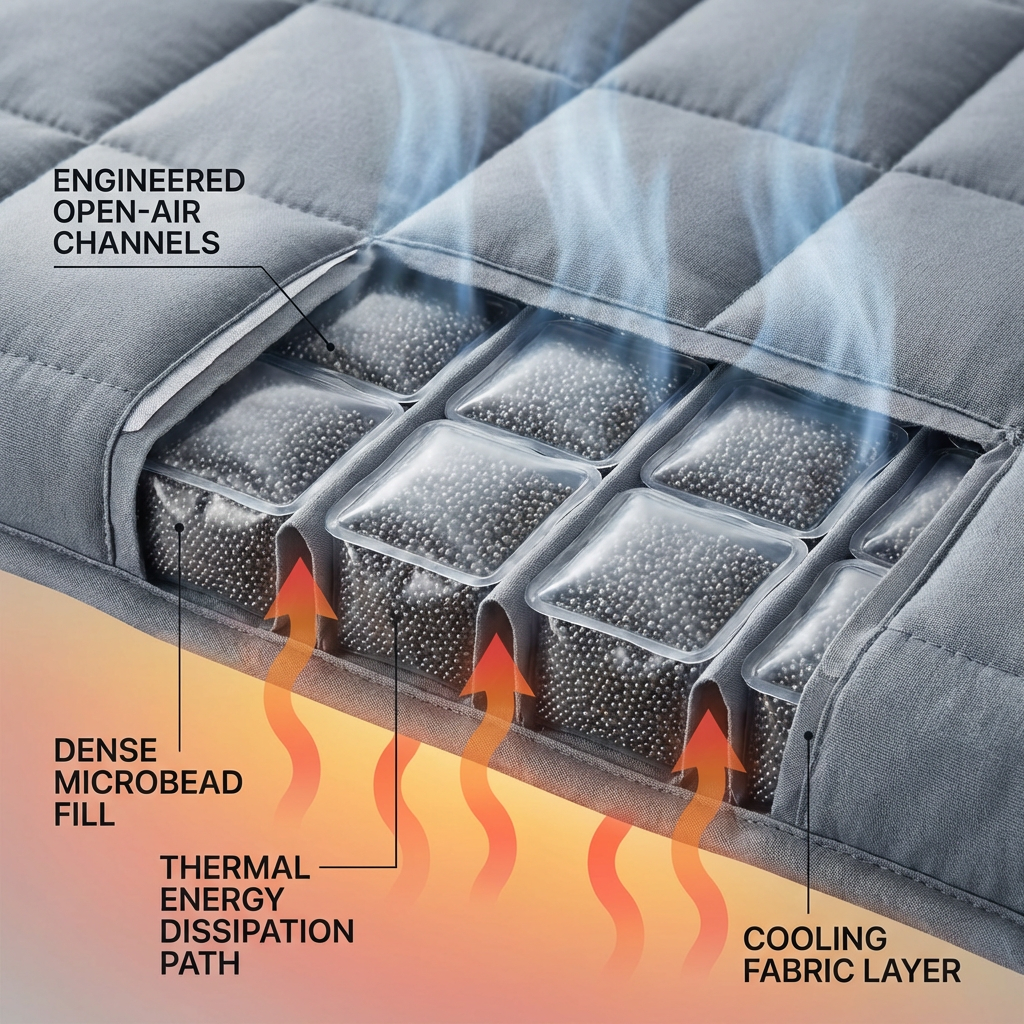
Rob explained what makes BareEarth different:
"We built the blanket as sixteen individually-sealed pockets in a 4×4 grid. Each pocket holds a measured load of glass beads. Between every pocket runs an open air channel — no beads, no fill, just a corridor."
The $447,000 Investment
"This sounds expensive to manufacture," I said.
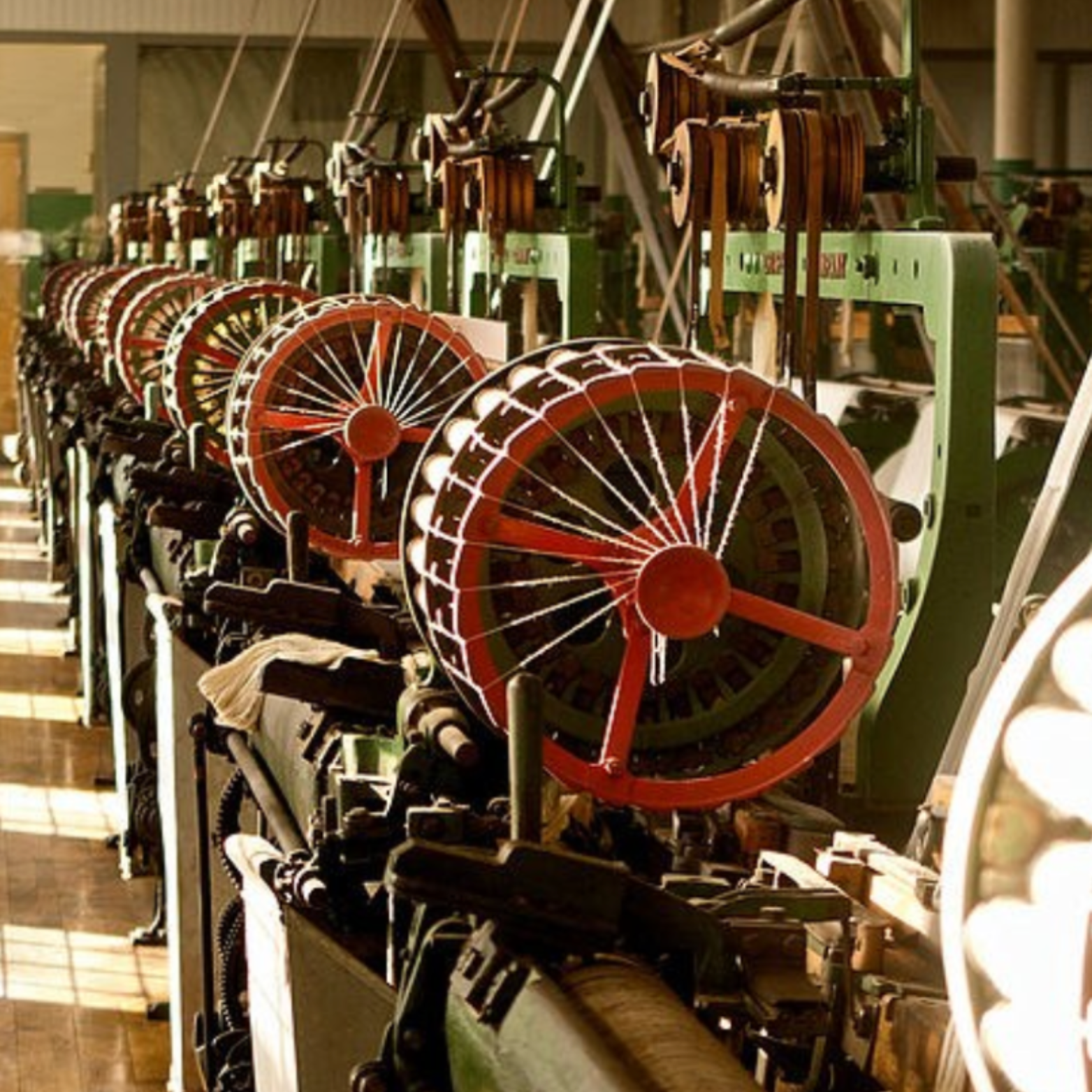
"My two colleagues from Globe and I pooled our retirement funds. About $450,000 total. No bedding factory in America was set up to do what we needed for weighted blankets specifically. We had to buy custom equipment from a medical-textile supplier. You can't find that on the street."
"Your wife must have loved that."
"She threatened divorce. But here's the thing — before I spent the retirement money, I showed our design to three of the biggest weighted blanket brands in America. You want to know what they said?"
"What?"
"'Rob, why would we spend more to make a blanket that works without heating? We can just advertise the knitted blankets for more $ instead' They literally told me their business model depends on the blankets failing."
And Yes, It's Patented
"Can't they just copy your technology?"
"Patent #US11,283,417. Took me two years to get approved. Now it's mine. They couldn't copy it if they wanted to."
"Which they don't."
The Heat-Proof Weighted Blanket
"Rob, do you have proof that this airflow system lasts and the washing machine doesn't ruin it?"
"Hold on."
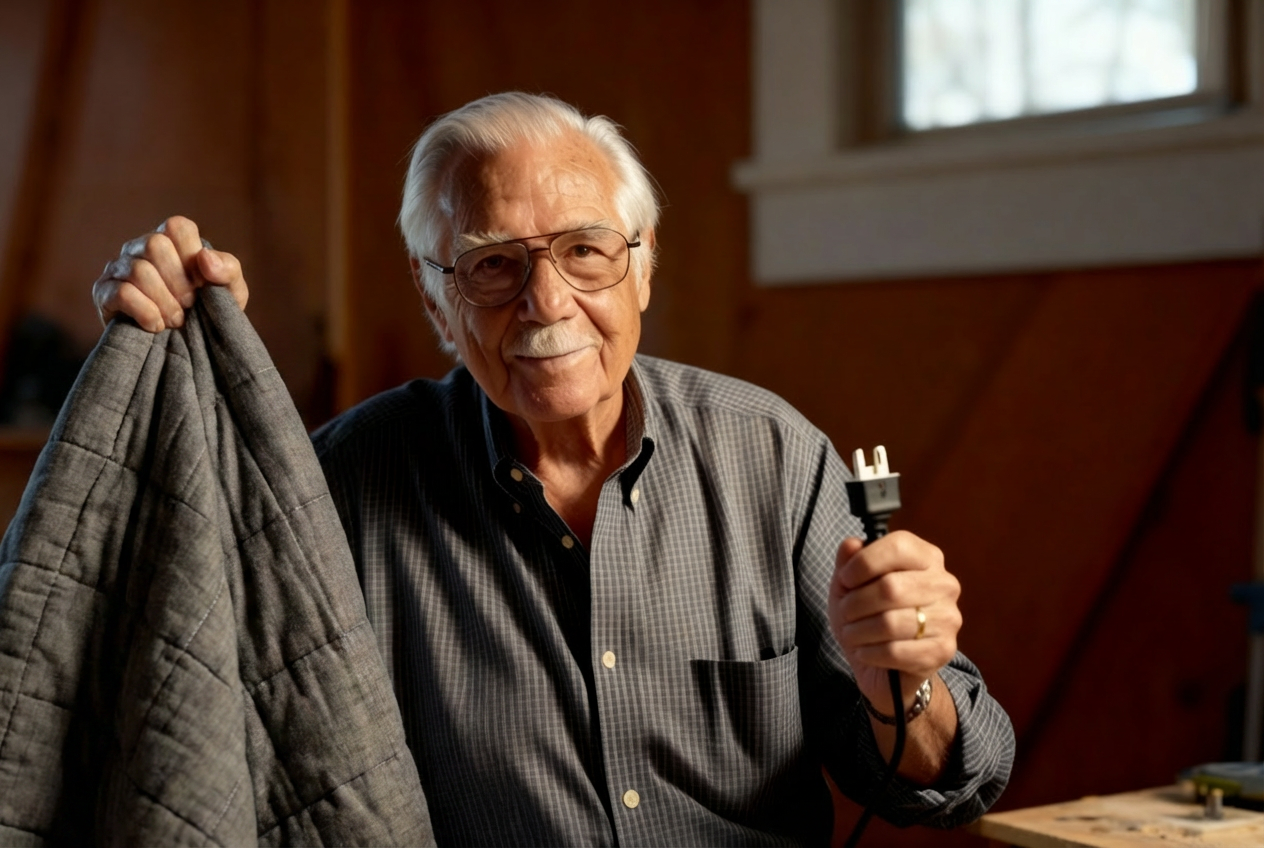
He came back on the video call with a blanket.
"This is our first prototype. We made it three years ago. My wife Miriam has slept under it every single night since. Washed it roughly once a week."
"How about the weight, is it still the same?"
He put it on a kitchen scale. The reading: 14.8 pounds.
Designed spec had been 15.0 pounds. He weighed it pocket by pocket. Heaviest pocket: 0.96 lb. Lightest: 0.92 lb.
Rob's blanket, after three years and 150+ washes, looked like it had left the factory yesterday.
"This is incredible," I said.
"This is just proper engineering," he replied.
Gift From Rob That Won My Heart
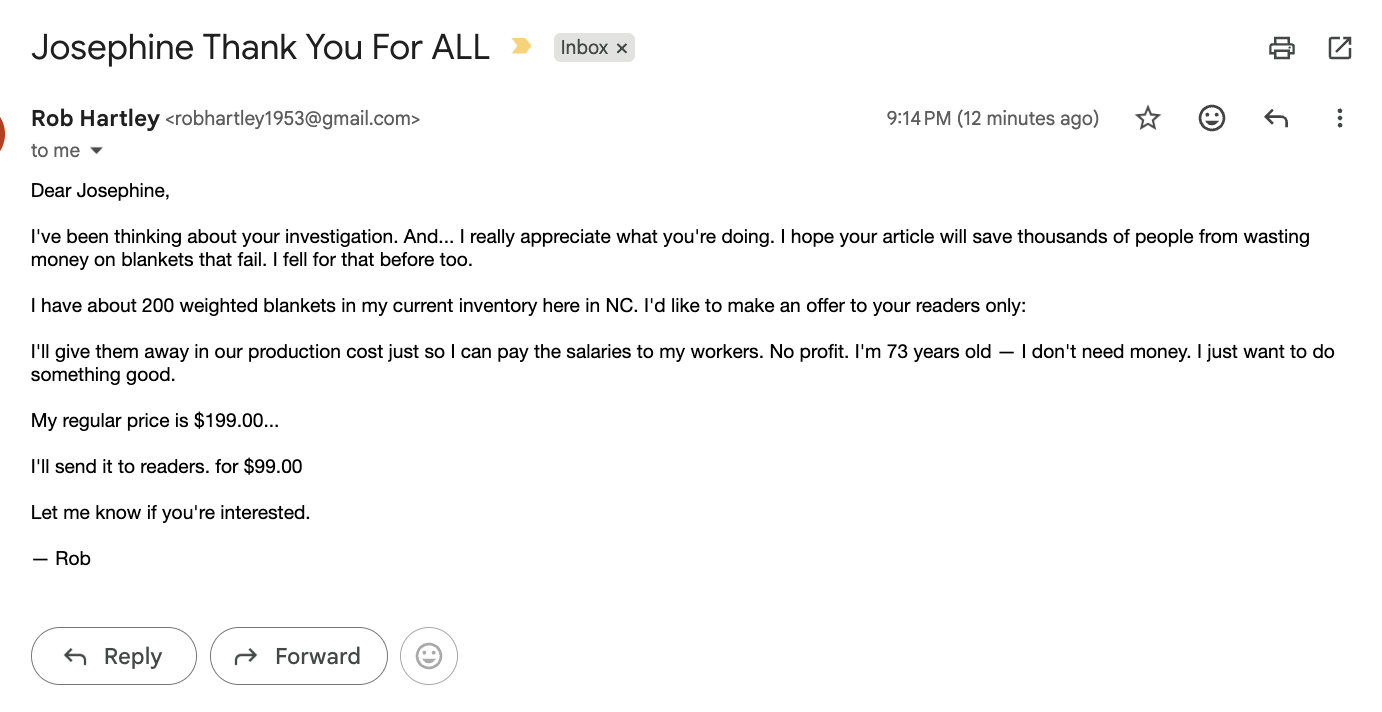
Two weeks after our call, Rob sent an email that surprised me.
I called him immediately.
"Rob, you can't be serious about selling at cost."
"Josephine, I know what these brands are doing. If your article helps people find a blanket that works AND saves them money? That's worth more to me than margin. This is marketing — the honest kind."
Get Rob's Blankets at Production Cost — $99.90
I reached out to BareEarth customers to verify long-term performance:
"I used to buy a new weighted blanket every season — they'd flatten out, beads would migrate, the cover would warm up like a sauna. This ONE blanket has outlasted four of those. My sleep score has been steady for two years."
"Anxiety-driven insomnia for fifteen years. Tried two other 'cooling' weighted blankets — both made me sweat. BareEarth still works after 18 months. I know Rob personally. Never had a doubt it would be great."
"As a nurse, I test everything. Other blankets get hot by month three. My BareEarth still feels the same after 14 months of 12-hour shifts and stress sweats — same weight, same airflow."
Safety & Care
Care Instructions:
Machine washable in a front-load washer on cold; tumble dry low. No dry cleaning, no hand washing, no special detergent.
Glass beads are food-grade and non-toxic. The outer shell is a 300-thread-count cotton-microfiber blend.
In 9 months of testing with multiple users:
My Professional Verdict
After 9 months of investigation, here's the truth:
Weighted blankets are scientifically legitimate. The studies are real, the benefits measurable.
Most bead blankets trap body heat. Your body kicks them off in your sleep without you knowing.
Knitted blankets solve heat but fail on durability, cleaning, and bed-slippage.
Only ONE blanket matched research-grade sleep outcomes in 9 months.
The solution isn't new technology. It's old technology — borrowed from the firefighter industry.
The Opportunity Rob Created
Rob's offer for readers of this investigation:
My Personal Investment
At 58, with three decades of medical experience, I've learned to be selective about what I endorse.
I now own four BareEarth blankets — one for my bedroom, one for my husband's side (he got tired of me stealing it), one each for my two adult children.
Not because Rob gave them to me (I insisted on paying full price).
But because after 9 months of rigorous testing, they're the only blankets still working.
My sleep scores stay consistent. My anxiety stays managed. My patients have stopped asking for sleep prescriptions, because I tell them this story instead.
How to Access Rob's Offer
Rob created a special page exclusively for readers of this investigation:
The offer expires 72 hours after this article publishes. Current inventory is approximately 280 blankets before the next production run in 3–4 weeks.
Every order includes a free under-sheet thermometer. Rob wants you to test heat retention yourself.
That's the confidence that comes from actual engineering, not marketing claims.
A Final Thought from Rob
When I asked Rob why he does this at 73, his answer stayed with me:
"I found something that genuinely helped my wife after years of suffering. Then I discovered an entire industry scamming people with products designed to fail. I had the knowledge to fix it. What kind of engineer — what kind of person — would I be if I didn't?"
— Rob Hartley, Textile Engineer

Dr. Josephine Hawthorn, RN, MSN. This investigation was entirely self-funded with no compensation from any mentioned company.
P.S. — If you already own a weighted blanket, put it on a bathroom scale this week. Nine of ten heavily-washed bead blankets read 2–3 lb under their label. The beads have leaked into the shell or out of the seams.
P.P.S. — Rob still reads every customer email himself. Write to BareEarth and a 73-year-old textile engineer in Hickory, NC will write back.